How to Create a Design Proposal That Wins Approval
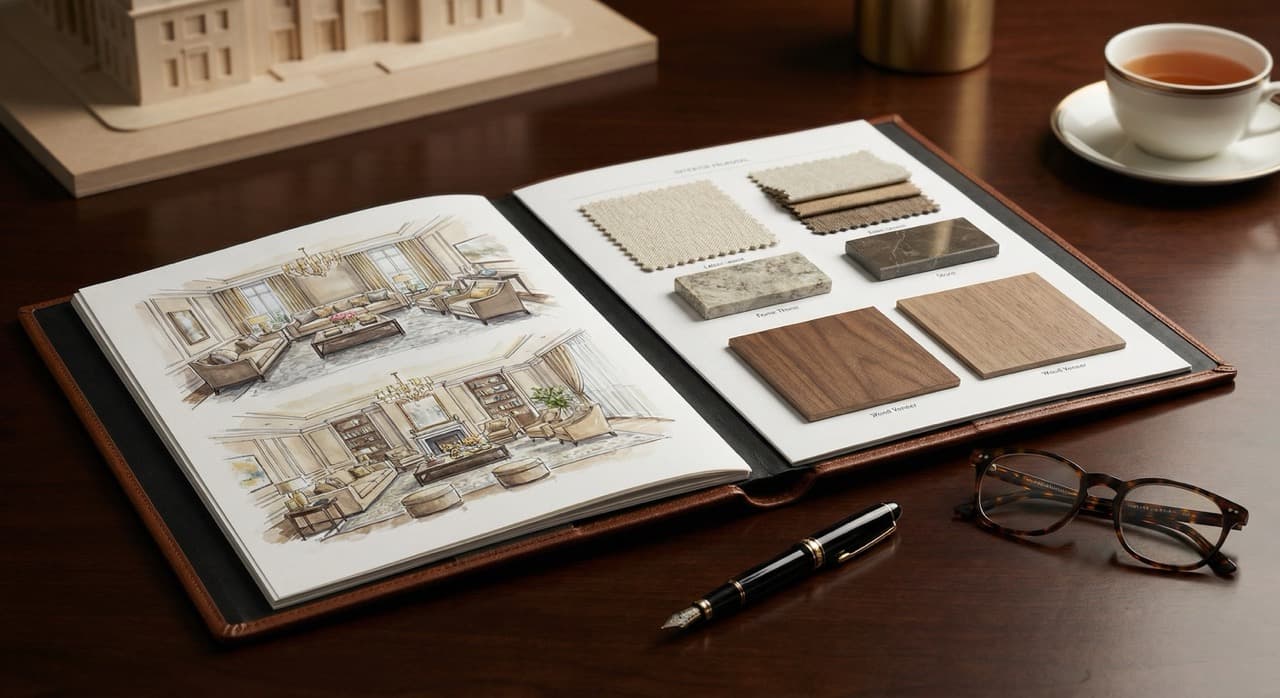
What Is an Interior Design Proposal?
An interior design proposal is a formal document that outlines scope of work, design vision, product selections, pricing, timeline, and project terms. It's the bridge between your initial consultation and the signed contract.
Beyond a simple price quote, it's a comprehensive roadmap showing clients exactly what they're getting, why those choices matter, and how the project will unfold.
Unlike a casual estimate, a proposal establishes professionalism.
It demonstrates that you've listened to the client's needs, researched solutions, and thought through every detail. Studies from the American Society of Interior Designers show that designers who present formal proposals close 40 percent more deals than those who rely on verbal agreements or informal emails.
A proposal serves multiple purposes at once:
- For the client, it provides transparency and builds confidence in your vision
- For you, it protects your intellectual property, sets clear expectations, and creates a legal reference point for the project scope
- It's also a sales document: every section should tell a story that justifies your design choices and the investment required
Core Elements Every Proposal Must Include
Executive Summary or Design Vision
Begin with a brief statement that captures the client's goals and your design philosophy for the project.
Don't bury the lead. Clients want to know immediately that you understand their vision and have a clear plan to deliver it.
Example:
"We will transform your 400 square foot dining room into a sophisticated entertaining space that balances warmth with modern elegance. Your palette will feature warm gray walls, natural wood surfaces, and brushed brass accents that tie into your existing living room aesthetic."
This section builds emotional connection before diving into spreadsheets and SKUs.
Scope of Work
Define what is included and what is not.
Be specific about deliverables:
- Design consultations
- Floor plans
- Renderings
- Product sourcing
- Vendor coordination
- Project management
- Installation supervision
- Post-install support
List the number of design meetings included, revision rounds, and any add-ons that fall outside the base scope.
Many designers get tangled in scope creep because they didn't clearly delineate boundaries upfront. A detailed scope section prevents misunderstandings later.
Example scope points:
- Two conceptual design presentations
- Up to three rounds of revisions to initial designs
- Full product sourcing and specification
- Vendor liaison and order coordination
- Project management through installation
- One final walkthrough and styling session
Detailed Product Selections with Visuals
This is where your design comes to life.
For each major product category (furniture, lighting, wall treatments, textiles, accessories), include:
- High quality images
- Brand names and SKU numbers
- Brief descriptions of why each piece matters to the overall concept
Don't just list items. Explain the connection to the design vision.
For example: "The Restoration Hardware Modern Sofa in Calico creates a neutral anchor that allows us to rotate seasonal textiles without major overhauls. Its deep seat depth aligns with your preference for comfort, while the rolled arms keep the silhouette classic."
When possible, show products in context with renderings or mood boards. Visual communication reduces buyer's remorse and helps clients see themselves in the finished space.
Include a product legend that notes whether items are existing, new purchases, or custom orders. Color codes or icons make this instantly readable.
Pricing Structure
Present pricing with transparency and context.
There are several common approaches:
Line-item pricing lists each product with cost, discount (if applicable), and total. This approach works well for smaller projects.
Category pricing groups products by room or function (living room furniture, lighting, textiles, accessories) and totals each category. This helps clients see where money flows.
Fixed-price proposals quote a total design fee plus a separate line for products. This structure protects designers from scope creep on fees while keeping costs transparent.
Always clarify which prices are wholesale and which are retail.
Some designers show retail value, professional discount, and client cost. This helps clients understand the value of your trade relationships.
Include payment terms clearly:
- Deposit due upon approval
- 50 percent due upon order
- Balance due upon delivery or installation
Specify whether shipping costs, sales tax, and installation labor are included or billed separately.
Timeline and Phases
Break the project into phases with realistic timelines.
A typical residential project follows this structure:
- Phase One: Design Development and Approval (2 to 3 weeks)
- Phase Two: Product Sourcing and Order Placement (1 to 2 weeks)
- Phase Three: Delivery and Preparation (4 to 8 weeks depending on custom items)
- Phase Four: Installation and Styling (1 to 2 weeks)
- Phase Five: Final Review and Adjustments (1 week)
Include buffer time for custom orders, backorders, and client approval delays.
Be realistic about dependencies. If a sofa takes 12 weeks to arrive, note that subsequent decisions about accent chairs should wait until closer to the installation date.
A visual timeline using a Gantt-style chart helps clients grasp the bigger picture at a glance.
Terms and Conditions
Your proposal should include essential legal and business terms:
- Design fee structure and payment schedule
- Deposit amount and non-refundability policy
- Cancellation policy and refund terms
- Revision limits included in the base fee
- Process for change orders when scope expands
- Intellectual property rights (your designs remain your own)
- Liability limitations
- Dispute resolution process
Consult a lawyer who specializes in design contracts to customize these for your business and jurisdiction. Generic terms are better than no terms, but customized terms provide better protection.
Your Credentials and Process
Include a brief bio or overview of your design philosophy, relevant certifications (NCIDQ, IIDA membership), and past projects that relate to the client's aesthetic.
This builds credibility, especially for new clients unfamiliar with your work.
Consider including a one-page case study or before-and-after project that aligns with the current proposal. This shows that you deliver results, not just pretty pictures.
Build polished proposals your clients will actually read.
Clip products from any vendor site, organize boards, and create client-ready proposals — all in one place.
Try TradeHub FreeStructuring Your Proposal for Maximum Impact
Visual Hierarchy and Readability
A 20-page proposal full of dense text will end up unread. Use white space, clear headings, and visual breaks to guide the eye.
Typography guidelines:
- Limit body text to 11 or 12-point fonts
- Use a clean sans serif for headers and a readable serif or sans serif for body copy
- Limit yourself to two fonts maximum
Include visuals on almost every page:
- Product photography
- Mood boards
- Renderings
- Floor plans
Proposals that are 40 to 50 percent images and 50 to 60 percent text outperform text-heavy documents by 3 to 1 in client engagement.
Create a cover page with the project name, your firm's branding, date, and a hero image or mood board. This sets the tone immediately.
Digital vs. Print Presentation
Digital proposals offer practical advantages:
- Easier to revise
- Can include hyperlinks to products
- Allow clients to share them with partners or family members
Tools like InDesign, Canva, or Figma let you create beautiful digital PDFs that maintain consistent branding. Many designers use white-label proposal software that automates formatting and includes built-in e-signature fields.
Print proposals work well for in-person presentations or clients who prefer paper. However, paper proposals are harder to update and can't include interactive elements like links or approval workflows.
Consider your client's preferences:
- Some clients appreciate receiving a physical proposal in the mail as a keepsake
- Others want a digital file they can review at their own pace and share with spouses or design consultants
Customization Is Non-Negotiable
A template is a starting point, never the deliverable. Every proposal should feel personalized to that specific client and project.
Reference specifics from your discovery meeting:
- The client mentioned loving mid-century design? Use that language
- They're hosting holiday dinners for 20? Explain how the space accommodates that
- They're concerned about durability with young children? Highlight stain-resistant fabrics and forgiving finishes
Clients can smell a cookie-cutter proposal from a mile away. The time you invest in customization directly correlates with approval rates and perceived value.
Common Proposal Mistakes to Avoid
Vague Descriptions and Missing Details
Saying "quality sofa in neutral tone" is not enough.
Specify:
- Brand and model
- Upholstery fiber
- Frame construction
- Finish
Clients can't make informed decisions without complete information.
Missing details also create opportunities for misunderstanding. If you don't specify "throw pillows not included," the client might expect them anyway.
Unrealistic Timelines
Padding timelines is tempting, but it erodes trust if you deliver early.
Being pessimistic about sourcing windows or fabrication times is smarter than overpromising:
- A five-week sofa that arrives in three weeks delights
- A three-week sofa that takes five weeks frustrates
Include a note explaining why some items take longer. Clients understand that a custom upholstered sectional takes 10 to 12 weeks. They'll be frustrated if you didn't explain that upfront.
Mixing Wholesale and Retail Prices Without Clarity
If you're showing both wholesale and retail prices, be crystal clear about what the client is paying.
Some designers show the retail value of products to emphasize the value of their discount, but this confuses clients if not explained clearly.
A simple approach: List the product, the client cost, and stop there. Your markup on products is your business, not the client's.
Burying Pricing or Making It Confusing
If a client has to hunt for the total project cost, you've failed in clarity.
Put total costs in a prominent box or summary section.
Break out the following separately so clients understand the cost structure:
- Design fees
- Product costs
- Installation
- Taxes
Many clients will skim the proposal looking first for scope and budget. Make it easy for them to find these sections quickly.
Overly Long Proposals
A 40-page proposal is a liability. Most clients will skim the first 10 pages and skip the rest.
Keep proposals to 15 to 25 pages maximum. Every page should earn its place by advancing the sale or adding essential clarity.
Group similar information. Combine credentials, testimonials, and process into one section. Don't repeat information across multiple pages.
No Clear Call to Action
End your proposal with a specific request for approval.
"Please sign the attached agreement to confirm we're moving forward" is clearer than hoping the client figures out what to do next.
Include clear instructions:
- How does the client approve?
- Do they sign electronically?
- Email it back?
- Meet in person?
The fewer friction points, the faster you'll get approval.
Presenting Your Proposal to the Client
The In-Person Presentation
If you're presenting the proposal in person, treat it like a story.
Walk through in this order:
- Design vision first
- Show mood boards and renderings
- Explain the product selections and why they matter
Use the proposal as a visual aid, not a script. Point out key pages, ask for reactions, and be ready to discuss modifications. Many clients will want to explore different options for specific items, so be prepared to suggest alternatives.
Build time for Q&A into your presentation. Clients will have questions about durability, sourcing timelines, and final costs. Answer thoughtfully and take notes on requests for changes.
The Digital Presentation
If the client is reviewing the proposal digitally, consider sending it with a brief cover email that highlights key sections.
Example:
"I've attached the proposal for your dining room project. Key highlights: the vision captures your love of mid-century style, the timeline shows installation by March 15th, and the total investment is $42,000. I'm available to discuss any questions this week."
Many clients will email back questions rather than approve immediately. Be responsive and patient. Walk them through sections they're unsure about.
Building Consensus with Multiple Decision-Makers
Many projects involve multiple decision-makers: spouses, business partners, or design committee members. Your proposal needs to convince everyone, not just one person.
Consider creating a one-page summary or executive overview that you can send to secondary decision-makers. This condensed version hits the key points without overwhelming recipients who aren't as invested in every product detail.
Another approach: Present to the primary client first, then facilitate a joint review with spouses or partners. This allows you to walk everyone through the vision simultaneously and answer questions from multiple perspectives.
Getting Sign-Off and Approval Workflows
E-Signature Solutions
Electronic signatures streamline approval.
Tools like DocuSign, Adobe Sign, or PandaDoc allow clients to:
- Review and sign proposals digitally
- Create a binding agreement without printing, scanning, or mailing
E-signatures also create a clear audit trail. You know exactly when the client signed and can archive the signed document for your records.
Approval and Revision Cycles
Some clients will ask for changes. Budget for two to three revision rounds in your proposal.
If substantial changes are requested, that's a change order conversation, not a revision.
When revisions are requested:
- Create a clean redline or clearly mark what changed
- Clients appreciate transparency about what's been modified
Set a deadline for approval. "Please review and let me know by Friday, March 8th if you'd like to move forward." This prevents proposals from languishing indefinitely.
Digital Approval Features in TradeHub
TradeHub includes built-in e-signature and inline approval workflows within visual boards and proposals.
Rather than sending a separate proposal document, you can:
- Create a project board in TradeHub
- Add all product selections with pricing and images
- Include an approval section where clients can accept, request revisions, or reject items directly in the platform
This keeps all communications and approvals centralized and creates a permanent record of what was approved and when.
Clients see a professional branded presentation, and you eliminate back-and-forth emails. The approval workflow also tracks which specific items are under review, approved, or rejected, preventing confusion about the project status.
FAQ
Q: How long should an interior design proposal be?
Aim for 15 to 25 pages. Every page should advance the sale or add essential clarity. Longer proposals often go unread, while shorter ones may lack necessary detail. Quality over quantity always.
Q: Should I include pricing in the initial proposal?
Yes, always. Clients expect pricing in a proposal.
If you're concerned about budget shock, discuss rough costs verbally before sending the proposal. Use the written proposal to provide transparent, itemized pricing that justifies your recommendations.
Q: How detailed should product descriptions be?
Detailed enough that the client could order the product themselves using your specification.
Include:
- Brand and model name
- Color or finish
- Relevant specifications (dimensions, materials, care instructions)
Vagueness creates misunderstandings and change orders.
Q: Can I use a template for every project?
Templates are fine as a starting point, but every proposal must be customized.
Use the same structure and branding, but change the content to reflect the specific project, client goals, and design vision. Generic proposals feel impersonal and reduce approval rates.
Q: What should I do if a client rejects the proposal?
Ask for specific feedback:
- Is the pricing too high?
- Do they dislike certain design choices?
- Are they concerned about timelines?
Understanding their objection allows you to revise intelligently. Sometimes a 15-percent price reduction on products or a faster timeline addresses concerns. Other times, the client needs to see alternative product options.
Q: How should I handle change orders after the proposal is signed?
Create a formal change order document that outlines:
- What's being added
- The cost
- How it affects the timeline
Have the client sign the change order before proceeding. This protects you from scope creep and keeps the client informed about how additions impact the budget.
Learn how TradeHub streamlines proposal creation and client approval workflows with built-in e-signatures and visual product boards. Better client presentations start with understanding how to position your work effectively in client presentation tips.
Build polished proposals your clients will actually read.
Join thousands of interior designers who use TradeHub to source products, manage projects, and present to clients with confidence.
Start Your Free TrialFree during beta. No credit card needed.